

Hey there! I'm a supplier of 35kV switchgear, and today I wanna chat about how to monitor the temperature of 35kV switchgear. It's super important, as overheating can lead to all sorts of problems, like equipment failure and even safety hazards. So, let's dive right in!
Why Temperature Monitoring Matters
First off, why should we even bother monitoring the temperature of 35kV switchgear? Well, these switchgears are crucial components in electrical power systems. They control, protect, and isolate electrical equipment. When they overheat, it could be a sign of various issues, such as loose connections, overloading, or insulation degradation.
Overheating can cause the insulation materials to break down more quickly, reducing their lifespan. It can also lead to arcing and short - circuits, which are not only dangerous but can also result in costly downtime. By monitoring the temperature, we can detect early signs of problems and take preventive measures before they turn into major disasters.
Methods of Temperature Monitoring
Thermocouples
Thermocouples are one of the most common temperature - sensing devices. They work based on the Seebeck effect, where a voltage is generated at the junction of two different metals when there is a temperature difference. You can install thermocouples at key points in the switchgear, like the busbars, contacts, and circuit breakers.
The advantage of thermocouples is that they are relatively inexpensive and can measure a wide range of temperatures. However, they do have some limitations. They need to be calibrated regularly, and the accuracy can be affected by factors like electromagnetic interference.
Resistance Temperature Detectors (RTDs)
RTDs are another popular option. They rely on the change in electrical resistance of a metal (usually platinum) with temperature. RTDs are known for their high accuracy and stability. They can provide more precise temperature measurements compared to thermocouples.
But RTDs are generally more expensive than thermocouples. They also have a slower response time, which might not be ideal if you need to detect rapid temperature changes.
Infrared Thermometers
Infrared thermometers are non - contact temperature measurement devices. They work by detecting the infrared radiation emitted by an object and converting it into a temperature reading. This is great for quickly checking the temperature of components without having to physically touch them.
You can use an infrared thermometer to scan the exterior of the switchgear or even some accessible internal parts. However, their accuracy can be affected by factors like the emissivity of the surface being measured and the presence of dust or other contaminants in the air.
Fiber - Optic Temperature Sensors
Fiber - optic temperature sensors are a more advanced option. They use the properties of light traveling through an optical fiber to measure temperature. These sensors are immune to electromagnetic interference, which is a big plus in an electrical switchgear environment.
They can also be installed in hard - to - reach places and can provide real - time temperature data over long distances. The drawback is that they are quite expensive and require specialized installation and maintenance.
Installation and Placement of Temperature Sensors
When installing temperature sensors in 35kV switchgear, proper placement is key. You need to identify the critical components that are most likely to overheat. For example, the busbars carry a large amount of current, so placing sensors on them can help detect any abnormal heating due to overloading or poor connections.
Contacts are another important area. Loose or worn - out contacts can cause high - resistance joints, which generate heat. Sensors should be placed as close as possible to these contacts to get an accurate temperature reading.
Circuit breakers are also crucial. They can experience overheating during normal operation or when there are faults. Installing sensors on the breaker contacts and the operating mechanism can help monitor their temperature.
Data Collection and Analysis
Once the temperature sensors are installed, you need to collect and analyze the data. You can use a data acquisition system to record the temperature readings at regular intervals. This system can be connected to a central monitoring station, where operators can view the data in real - time.
Analyzing the data involves looking for trends and patterns. For example, a gradual increase in temperature over time might indicate a developing problem, such as a slowly loosening connection. Sudden spikes in temperature could be a sign of a more immediate issue, like a short - circuit.
You can also set up alarm thresholds. When the temperature exceeds a certain limit, an alarm can be triggered, alerting the operators to take action. This could involve shutting down the switchgear, performing maintenance, or adjusting the load.
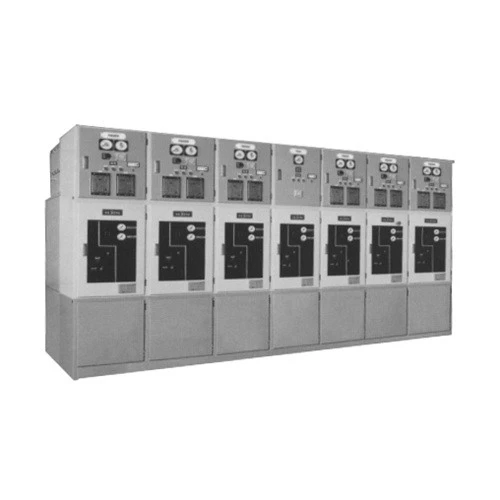

Our 35kV Switchgear Offerings
As a 35kV switchgear supplier, we offer a range of high - quality switchgears that are designed with temperature monitoring in mind. For example, our KYN61 - 40.5 Armored Drawout AC Metal - Clad Switchgear is equipped with advanced temperature - sensing technology. It has built - in sensors at critical points to ensure that the temperature is constantly monitored.
We also have the 10kV Intelligent Switching Station (Outdoor Ring Main Unit), which is suitable for various outdoor applications. It comes with reliable temperature monitoring systems to protect the equipment from overheating.
And our XGN15 - 12(F/F.R) Box - Type Fixed AC Metal - Clad Switchgear is another great option. It offers excellent performance and is designed to be easily integrated with temperature monitoring devices.
Contact Us for Procurement
If you're in the market for 35kV switchgear or need to upgrade your existing temperature monitoring systems, we'd love to hear from you. We have a team of experts who can help you choose the right switchgear and temperature - monitoring solutions for your specific needs. Whether you're a small - scale power distributor or a large industrial facility, we've got the products and services to meet your requirements. So, don't hesitate to reach out and start a procurement discussion with us.
References
- "Electrical Power Switchgear Handbook" by Various Authors
- "Temperature Measurement: Principles and Practice" by John W. Nye