


Introduction
A high-voltage switchgear project can meet every electrical requirement on paper and still suffer costly delays after the purchase order is signed. The problem is often not the switchgear itself, but the logistics assumptions made too late: transport dimensions were not confirmed, the packing method was unsuitable for a long sea voyage, the site had no practical unloading route, or the delivered equipment could not be inspected quickly enough to protect a damage claim.
For B2B buyers, logistics should therefore be treated as part of switchgear engineering-not as a task handed to a freight forwarder after production. IEC 62271-200:2021 applies to AC metal-enclosed switchgear and controlgear for rated voltages above 1 kV and up to and including 52 kV, covering a large part of the equipment used in industrial and utility applications.

GangHeng Electric Ships Five Switchgear Units To Myanmar
1. Why Logistics Must Be Considered Before the Purchase Order
High-voltage switchgear is different from ordinary electrical goods because the equipment is large, heavy, configuration-dependent, and sensitive to handling and environmental conditions. A switchgear lineup may include withdrawable circuit-breaker trucks, busbar sections, protection and control compartments, and project-specific accessories. The final transport arrangement can therefore change with the technical configuration.
Siemens, for example, specifies that transport dimensions and weights can vary with the project, and its transport guidance distinguishes road, sea, and air packing methods. For sea freight, its example includes sealed PE protection, a closed wooden crate, desiccant bags, and a sealed wooden base. The practical lesson for buyers is simple: never approve a logistics quotation from a product name alone. Ask for the actual packed dimensions, gross weight, number of shipping units, lifting method, and storage requirements for your configured order.
Gangheng's current product range includes 12kV-class KYN28A-12 equipment as well as 40.5kV JYN1-40.5 and GBC-40.5 switchgear, with different construction and project configuration options. A logistics plan designed for one model should not automatically be reused for another.
2. The Six Logistics Parameters Buyers Should Confirm
First, confirm the transport dimensions rather than only the cabinet's nominal dimensions. Request W × D × H for each shipping unit after packing. Then compare those dimensions with container limitations, truck access, building doors, ramps, and the final equipment room.
Second, confirm net weight and gross weight separately. Gross weight is the figure that affects many transport and handling decisions because it includes packaging and shipping materials. Siemens publishes both net and gross weights in its transport tables, demonstrating why the distinction matters.
Third, identify the shipping-unit breakdown. Confirm whether the equipment will ship as individual panels, partially assembled sections, or with certain accessories packed separately. Do not assume that "one switchgear lineup" means "one shipping unit."
Fourth, confirm lifting points and the recommended handling method. The site team should know whether a crane, forklift, pallet truck, or another method is required. Eaton's current receiving and handling guidance specifically addresses site transport facilities, floor requirements, shop drawings, and recommended lifting procedures.
Fifth, define the environmental protection required during transit and storage. Long-distance international shipping creates exposure to humidity, condensation, salt air, and temperature changes. A moisture barrier, desiccant, protective wrapping, and suitable storage procedure should be specified according to the manufacturer's instructions and the shipping route.
Sixth, confirm the document package before dispatch. Packing lists, equipment identification, shipping marks, drawings, manuals, certificates, and other agreed project documents should match the physical shipment. A documentation mismatch can create a delivery problem even when the equipment itself is technically correct.
3. How Switchgear Configuration Affects Shipping Cost and Risk
A common purchasing mistake is to compare suppliers only by EXW or FOB equipment price. A better approach is to evaluate total landed cost.
The logistics cost of high-voltage switchgear can include export packing, factory handling, inland transport, port handling, ocean freight, insurance, customs-related charges, destination handling, final-mile delivery, unloading equipment, temporary storage, and project waiting time. A supplier with a slightly higher equipment price may produce a lower overall project cost if its packing, shipping-unit planning, documentation, and delivery coordination reduce downstream handling.
Configuration is one of the biggest variables. Drawout switchgear contains movable primary components that may require transportation protection. Metal-clad construction also means the cabinet must arrive with its mechanical integrity preserved; dents, deformation, moisture ingress, or damage to operating mechanisms can create issues far beyond cosmetic repair.
For buyers evaluating [Metal Clad Switchgear], the right question is therefore not simply "What is the price per panel?" It is "What is the price and logistics risk of the complete delivered configuration?" Gangheng offers the JYN1-40.5 compartmentalized drawout AC metal-clad switchgear for 25–40.5kV applications, so the logistics review should be tied to the selected configuration and project drawings rather than a generic model name.
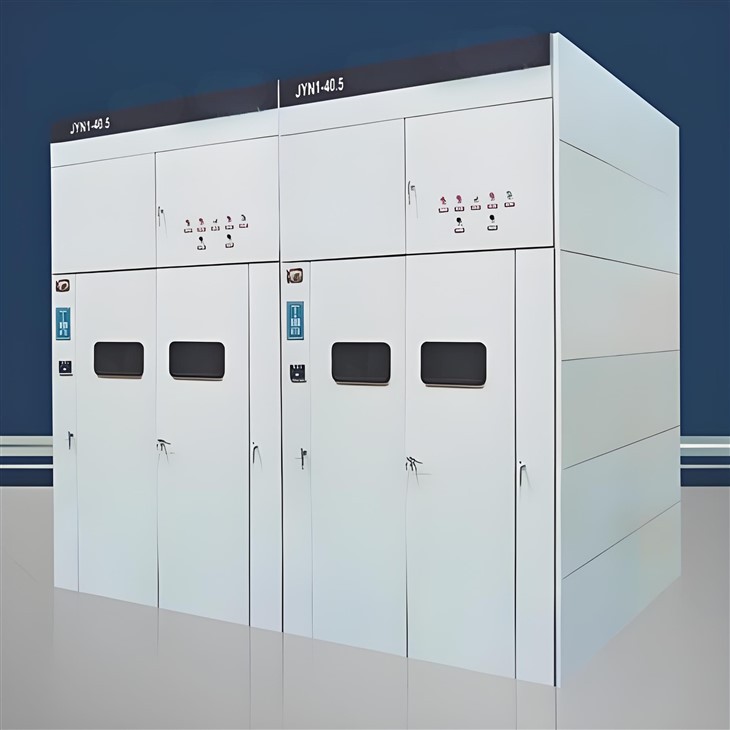
Gangheng JYN1-40.5 Compartmentalized Drawout AC Metal-Clad Switchgear
4. Choosing a Transport Method: Cost, Time, and Risk
For international project orders, sea freight is often a practical starting point because switchgear is comparatively heavy and dimensional. Air freight may make sense for urgent replacement components or small quantities, but it represents a different economic decision from shipping complete cabinets.
The key is not to ask which transport method is universally "best." Ask which method satisfies the project's required delivery date without creating disproportionate handling or damage exposure.
For an overseas project, confirm the required on-site date first, then work backward through manufacturing, testing, export documentation, port cut-off, transit, customs clearance, destination transport, and site unloading. This reverse-planning approach is more useful than looking only at nominal vessel transit time.
Gangheng's company information states that delivery timing depends on order size, with reference lead times of about 30 days for a US$300,000 order, 45 days for US$700,000, and 60 days for US$1.5 million orders. These should be treated as project planning references rather than guaranteed transit times, because manufacturing, testing, shipping schedules, customs, and destination conditions are separate variables.
5. Export Packaging: What Should Be Written Into the PO?
"Suitable export packing" is too vague for a high-value switchgear order.
A purchase order should define the expected protection level and identify the conditions the shipment will face. For sea freight, the buyer should confirm protection against moisture and mechanical movement, secure fixing to the shipping base, clear external markings, and documentation for each shipping unit. Siemens, for example, specifies sealed PE protection, closed wooden crates, desiccants, and sealed wooden bases for sea-freight packing of the referenced switchgear family.
The buyer should also distinguish transport packaging from storage protection. The two are related but not identical. If equipment will remain at the site before installation, the manufacturer's storage conditions must be followed. Eaton's receiving, handling, and storage guidance treats storage environment and floor conditions as part of the overall delivery process.
This is also a practical cost-control issue. Do not simply ask for "the strongest packaging." Ask the manufacturer to recommend the packing method based on the route, climate, duration, lifting method, and equipment configuration. Overpacking increases cost and shipping volume; under-protection can create much larger costs later.
6. The Hidden Site Risk: Receiving, Unloading, and Storage
Many logistics problems become visible only when the truck reaches the project site.
Before shipment, the EPC contractor or end user should confirm the unloading route, available crane or forklift capacity, ground conditions, door openings, turning radius, temporary storage area, and the sequence in which panels will be moved into the switchroom.
Schneider Electric's receiving instructions call for checking the packing list against the equipment received and inspecting the equipment immediately for transport damage. Its receiving checklist also emphasizes photographs for non-conforming conditions and checking nameplates against the project work order.
This suggests a useful procurement rule: make receiving inspection part of the logistics plan, not an afterthought. At minimum, the site team should record the condition of the packaging, photograph visible damage, verify shipping marks and equipment identification, check quantities against the packing list, and notify the carrier and supplier promptly when damage or shortages are suspected.
7. HV Switchgear Procurement: A Practical Pre-Shipment Checklist
Before approving dispatch of HV Switchgear, ask the supplier to provide the final shipping schedule and confirm six items in writing: packed dimensions, gross weight, shipping-unit count, packing method, lifting/handling requirements, and storage conditions.
Then match these data against your actual site constraints.
For projects requiring customized configurations, this step becomes even more important. Gangheng states that it supports customized configurations and accepts orders without a minimum order quantity, while its switchgear portfolio covers 12kV and 40.5kV classes. Customization should trigger an updated logistics review because a modified cabinet, busbar arrangement, accessory package, or shipping split can change the final transport data.
Gangheng has been operating since 2004 and has more than two decades of experience in power distribution equipment manufacturing. Its company information also records overseas supply experience in markets including Iran, Kyrgyzstan, Zimbabwe, and Tanzania.
8. Transmission Switchgear: Verify the Network Role Before You Specify the Term
The term "Transmission Switchgear" can be used broadly in online purchasing searches, but buyers should always verify the actual system voltage and electrical role before placing an order.
For example, Gangheng describes its KYN28A-12 Armored Drawout AC Metal-Clad Switchgear as a system designed for 3–10kV three-phase AC 50Hz single-busbar systems and used for receiving, distributing, controlling, protecting, and monitoring circuits. Therefore, when searching for [Transmission Switchgear], buyers should evaluate the actual electrical duty and network position rather than select a product based only on a search term.
For any transmission or distribution project, confirm the rated voltage, short-circuit requirements, busbar scheme, installation environment, applicable standards, protection configuration, and physical delivery constraints together.

Gangheng GBC-40.5 Transmission Switchgear
Conclusion: Make Logistics a Procurement Deliverable
The most reliable way to control high-voltage switchgear logistics is to make logistics information a formal procurement deliverable before production is finalized.
A practical buyer process is straightforward: define the electrical requirement; freeze the equipment configuration; obtain final packed dimensions and gross weights; confirm the shipping-unit breakdown; approve export packaging; review the transport route; verify site unloading conditions; and prepare a receiving inspection checklist before dispatch.
This approach turns logistics from a reactive freight problem into a controllable engineering parameter. For international B2B buyers, it can reduce avoidable handling costs, protect the delivery schedule, and make final switchgear installation more predictable.
For buyers comparing suppliers, the most useful question is not simply "Who offers the lowest switchgear price?" It is "Who can provide the right equipment, the right logistics data, and a delivery plan that works from factory to site?"
FAQ
Q: What Information Should I Request From A High-Voltage Switchgear Supplier Before Shipment?
A: Ask for the final packed dimensions, gross and net weights, number of shipping units, packing method, lifting instructions, storage requirements, packing list, and shipment schedule. These details should reflect the exact project configuration.
Q: Is Sea Freight Suitable For High-Voltage Switchgear?
A: For many international project orders, sea freight is a practical option for heavy and dimensional equipment, but suitability depends on the required delivery date, route, packing, cargo arrangement, and site conditions. The decision should be based on total landed cost and project risk rather than freight rate alone.
Q: How Can I Reduce Switchgear Logistics Costs?
A: Start by reducing uncertainty rather than simply reducing packaging. Compare complete landed cost, optimize shipping-unit planning with the manufacturer, confirm the route before production, and avoid unnecessary storage or special handling at the destination.
Q: What Should We Check When The Switchgear Arrives?
A: Check the external packaging, signs of impact or water ingress, shipping marks, equipment nameplates, quantities, and packing-list consistency. Photograph any abnormal condition and report suspected transport damage promptly. Schneider Electric similarly recommends checking shipment completeness, inspecting for transport damage, and documenting non-conforming conditions.
Q: Can Customized Switchgear Be Shipped Internationally?
A: Yes. Customized switchgear can be supplied internationally, but every project-specific change should be followed by a review of packed dimensions, weight, shipping-unit count, documentation, and site handling requirements. Gangheng states that it supports customized configurations, international supply, and orders without a minimum quantity.