

In modern commercial complexes, high-rise buildings, manufacturing plants, and substations, space optimization often requires electrical engineers to place the main low-voltage distribution room in the basement. However, this setup leads to a frequent question: Can low-voltage switchgear and distribution cabinets be safely installed in a basement?
The technical answer is yes, but it is highly conditional. Unlike standard ground-level installations, a basement environment introduces severe ambient challenges-primarily humidity, poor natural ventilation, and the risk of water ingress.
As a certified National High-Tech Enterprise specializing in power distribution for over 20 years, Zhejiang Gangheng Electric Company Limited (GangHeng) manufactures type-tested low-voltage switchgear designed to withstand rigorous environmental demands. Below is an engineering guide on the mandatory requirements and equipment selection for basement switchgear installations.

1. Environmental Challenges and Engineering Countermeasures
To safely operate heavy-duty low-voltage switchgear like GCK, MNS, or GGD types in a subterranean environment, several critical mitigation measures must be integrated into the infrastructure design.
A. Moisture and Corrosion Control
Basements are naturally prone to high relative humidity (>70%). High humidity accelerates the oxidation of copper busbars, compromises the dielectric properties of air insulation, and degrades control circuit components.
The Solution: Switchgear installed in basements must be fitted with internal space heaters controlled by automatic hygrostats. GangHeng's switchgear enclosures are manufactured using high-precision CNC punching and laser cutting machines, ensuring tight tolerances and seamless sealing. Furthermore, busbars undergo electroplating to prevent surface corrosion.
B. IP Protection Rating Selection
Due to the threat of dripping condensation from overhead pipes or seepage through basement walls, standard open-type panels are strictly prohibited.
The Solution: Equipment must feature an adequate Ingress Protection (IP) rating. For basement applications, a minimum rating of IP3X or IP4X is recommended to prevent foreign bodies and vertical water droplets from entering the live compartments.
C. Flood Prevention and Elevated Basements
The absolute worst-case scenario for a basement substation is water accumulation from heavy rainfall or plumbing failure.
The Solution: Switchgear cabinets must never be placed directly on the raw basement floor. They must be mounted on an elevated concrete plinth (base channel steel) at least 100mm to 300mm above the finished floor level to isolate the equipment from minor floor flooding.
2. Choosing the Right Low-Voltage Switchgear for Basement Sub-Stations
Selecting the correct structural layout of the switchgear is vital for space-constrained and low-accessibility areas like basements. GangHeng offers three premium, compliant low-voltage configurations engineered for these demanding environments:
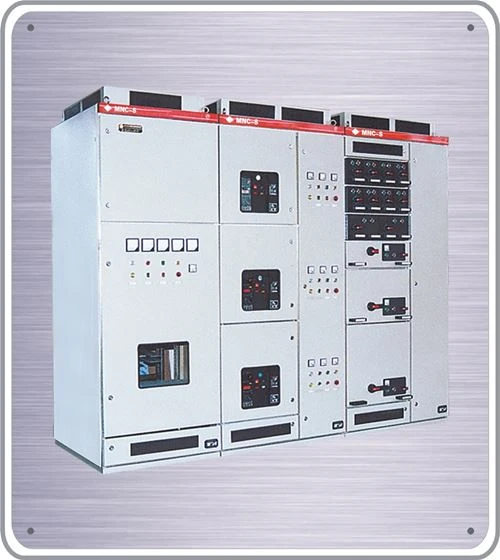
1. MNS Type Low-Voltage Drawout Switchgear
Best For: Large-scale commercial buildings and continuous industrial processes where downtime is prohibited.
Basement Advantage: The MNS type features a highly compact, back-to-back modular design that significantly saves premium basement square footage. Its fully compartmentalized drawout units allow maintenance teams to swap out faulty circuit breaker modules quickly without shutting down the entire panel, ensuring high reliability and safety.
2. GCK Type Low-Voltage Drawout Complete Switchgear
Best For: Power plants, substations, and high-rise residential distribution hubs.
Basement Advantage: GCK switchgear provides high breaking capacity and excellent thermal stability. The drawer units are equipped with clear mechanical interlocking mechanisms, preventing accidental contact or operational errors in low-lit basement environments.
3. GGD Type Low-Voltage Fixed Complete Switchgear
Best For: Factory utilities, mines, and lower-budget projects with predictable loads.
Basement Advantage: GGD is a highly cost-effective, robust, fixed-type switchgear cabinet. Because it features a simpler internal structure with spacious cable terminal zones, it is remarkably easy to install and maintain in deep basement rooms where specialized handling tools are difficult to maneuver.
3. Compliance and Installation Standards
Every basement power distribution project must adhere strictly to local building codes and international quality management frameworks, such as ISO9001 and CQC certification.
[Basement Substation Layout Requirements]
- Clearance: Minimum 800mm behind panels for maintenance access.
- Ventilation: Forced HVAC system achieving 15+ air changes per hour.
- Drainage: Dedicated sump pump system located away from main electrical risers.
Accessibility: Adequate corridors must be maintained. The entry doors to the basement switchgear room must open outwards and be wide enough to allow for the complete removal or replacement of the largest switchgear cabinet frame.
Ventilation Infrastructure: Forced mechanical ventilation or specialized HVAC systems must be operational 24/7 to maintain the ambient room temperature below 40°C and prevent air stagnation.
Why Global Procurement Teams Trust GangHeng
Engineering sub-surface power networks demands equipment backed by rigorous manufacturing standards. At Zhejiang Gangheng Electric, all our low-voltage fixed and drawout switchgear portfolios undergo complete type-testing and are included in the State Grid e-commerce platform registry.
| Feature | GangHeng Manufacturing Standard | Customer Benefit |
| Material Processing | CNC Bending, Laser Cutting, & Copper Busbar Bending Machines | Perfect mechanical alignment, low contact resistance, and durable enclosures. |
| Certifications | ISO9001, OHSAS18001, and CQC Certified Type-Reports | Global standard compliance, ensuring smooth customs and project approvals. |
| Service Guarantee | 12-Month Free Warranty + 5-Year Hidden Defect Coverage | Ultimate peace of mind for long-term infrastructural investments. |
From domestic long-term enterprise partnerships lasting over a decade to heavy-duty international deployments in Tanzania and Kyrgyzstan, GangHeng delivers precision-engineered switchgear that handles the toughest environmental challenges.
Planning a basement electrical substation layout?
Get expert engineering assistance. Contact the GangHeng Technical Team today or call us at zjgh2@ghswitchcabinet.com. We will assist you in selecting the ideal IP ratings, dimensions, and configurations for your specific project environment.
References
IEC 61439-1/-2: Low-voltage switchgear and controlgear assemblies.
National Electrical Code (NEC) Article 110: Requirements for Electrical Installations.
GangHeng Corporate Database.