

Most guides on low voltage switchgear selection tell you which parameters exist. Few tell you what happens when you don't ask about them - and who benefits from your silence.
Low voltage switchgear is a non-standard, made-to-order product. Send the same specification to five manufacturers and you can receive quotes varying by 30% or more. That gap doesn't come from nowhere. It lives inside the ten parameters below.
This guide is written for procurement managers, EPC contractors, and industrial buyers who need to close that gap before signing a purchase order - not after a failed site inspection.
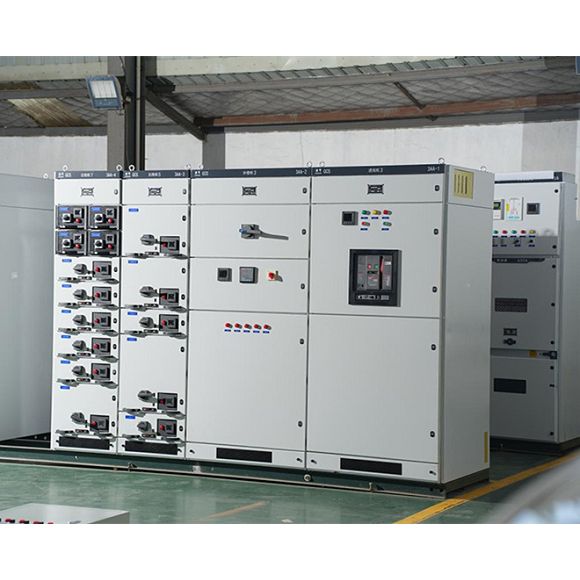
Low voltage switchgear
1. Rated Voltage - Match the Cabinet to Your Grid, Not Just the Nameplate
The standard rated voltage for low voltage switchgear is 380V or 400V, covering the majority of industrial and commercial distribution systems. But the real question isn't the voltage itself - it's whether the cabinet's insulation class and creepage distances are matched to the actual grid fluctuation range at your project site.
In markets across the Middle East, Africa, and parts of Southeast Asia, grid voltage fluctuations can exceed the assumptions built into a standard design. A supplier quoting a textbook spec without site-specific adaptation is transferring that risk to you.
What to ask: Has the supplier adjusted insulation design and clearance distances based on your local grid conditions, or are they shipping a standard configuration regardless of where it's installed?
2. Rated Current - The "Nominal vs. Continuous" Problem
Rated current determines the maximum load the switchgear can handle. The risk isn't misunderstanding what rated current means - it's accepting a nameplate figure without verifying it reflects sustained, real-world continuous operating current rather than a theoretical peak used to make the spec sheet look stronger.
Some manufacturers rate their equipment under ideal laboratory conditions. In actual operation with typical load profiles, cabinets that appear adequately rated can run hot, degrading insulation and shortening service life.
What to ask: Request a third-party temperature-rise test report tied to the specific configuration you're ordering - not a generic model certificate. If the supplier can't provide one, that's the answer.
3. Rated Short-Circuit Breaking Capacity - The Parameter That Sets the Price
This is the single most influential parameter on both safety classification and cost. Short-circuit breaking capacity typically ranges from 15kA to 50kA across product tiers, and the higher the rating, the more demanding the requirements for materials, busbar cross-section, and structural rigidity.
The risk cuts both ways. Oversizing this parameter wastes budget - significantly. Undersizing it is a safety failure waiting to happen. Neither outcome is acceptable.
The correct approach is to obtain the prospective fault current data at your installation point from your upstream utility or design engineer, then match the cabinet's rating to that figure with an appropriate safety margin.
What to ask: What is the actual fault level at my installation point? Does the quoted breaking capacity match - or has the supplier defaulted to a lower-cost tier without flagging it?
4. IP Protection Rating - Same Label, Very Different Cabinet
IP rating describes the enclosure's resistance to dust and moisture. IP4X or IP54 appears on spec sheets as a single number, but two cabinets with identical IP labels can be built to completely different standards of durability.
The difference lies in steel plate thickness, door gasket quality, paint adhesion, and coating process. A low-cost build might use thin-gauge steel with standard spray paint. A properly built cabinet uses thicker cold-formed steel with electrostatic powder coating - offering far stronger adhesion, better corrosion resistance, and longer service life in humid, coastal, or dusty environments.
What to ask: Request written confirmation of steel plate thickness (measured in mm, not just grade), coating process type (polyester powder coat vs. standard spray), and gasket material. Don't accept an IP number alone as a sufficient answer.

GGD fixed mounted low voltage switchgear
5. Cabinet Structure Type - Fixed vs. Withdrawable
This decision has a direct and lasting impact on total lifecycle cost. GGD fixed mounted low voltage switchgear features components permanently installed within the cabinet - a design that delivers a compact footprint, lower procurement cost, and straightforward maintenance for standard industrial and commercial power distribution.
Withdrawable (draw-out) switchgear allows circuit modules to be removed under live conditions, which is genuinely valuable in applications where any interruption to power supply is operationally unacceptable. It is also significantly more expensive.
The problem is that withdrawable configurations are frequently recommended for projects where fixed-mounted designs would perform identically - adding cost without adding value.
What to ask: Does your specific application genuinely require live module extraction? If your maintenance windows allow brief planned outages, a fixed-mounted design is almost certainly the right specification.
6. Applicable Standards - Four Words That Mean Nothing Without a Standard Number
"Complies with international standards" is a phrase that appears on almost every switchgear datasheet. It communicates nothing specific and can be used to imply compliance with standards the product has never been tested against.
Meaningful compliance means citing exact standard numbers: for fixed low voltage switchgear, this means GB 7251 (Low-voltage Switchgear and Controlgear Assemblies) and JB/T 5877 (Low-voltage Fixed Enclosed Switchgear Assemblies) as a baseline. Export projects may require ANSI/IEEE or BS standards.
What to ask: Request the specific standard numbers in writing. For international projects, confirm the supplier has actual production experience under the required standard - not just a willingness to adapt when pressed.
7. Environmental Operating Conditions - The Parameter That Determines Lifespan
Ambient temperature, humidity, altitude, and installation angle are routinely overlooked by procurement teams but are directly responsible for premature equipment failure in the field.
Standard operating conditions typically require: ambient temperature between -5°C and +40°C (with 24-hour average not exceeding +35°C), relative humidity not exceeding 50% at maximum temperature, installation altitude not exceeding 2,000 metres, and installation angle within 5° of vertical.
If your project site falls outside any of these parameters - high-altitude mining operations, tropical coastal facilities, or sites with significant vibration - and the supplier hasn't addressed this specifically, the standard cabinet will be underspecified for your environment.
What to ask: Does the project site exceed any standard environmental parameter? If so, what specific design modifications has the supplier made to address this, and are those modifications documented in the technical specification?
8. Certifications and Institutional Track Record - What Certificates Don't Tell You
ISO 9001 and ISO 14001 certifications confirm that a manufacturer operates a documented quality management system. They do not confirm that any specific cabinet leaving that factory meets your project requirements.
The more meaningful indicator of a supplier's actual delivery capability is their institutional track record - whether they are a qualified supplier to national grid operators, whether they have fulfilled contracts for major state-owned enterprises or EPC contractors, and whether they can provide acceptance reports from completed projects.
A supplier approved as a qualified vendor for State Grid or with documented supply history to large infrastructure contractors has been through procurement audits that most smaller manufacturers have not.
What to ask: Beyond the certificate list, can the supplier provide project completion documentation or client references from comparable installations? The ability - or inability - to answer this question is informative in itself.
9. Lead Time - The Most Commonly Misrepresented Number in a Quotation
"Approximately 45 days" is a statement with no contractual meaning. Lead time for non-standard switchgear is directly dependent on order value, customization complexity, and production scheduling - and suppliers who quote a single figure regardless of order specifics are either simplifying for convenience or avoiding a commitment they can't keep.
A transparent lead time structure ties delivery timelines to order parameters. As a reference benchmark: orders around USD 300,000 should typically be deliverable within 30 days; USD 700,000 within 45 days; USD 1,500,000 within 60 days. Suppliers who can articulate this kind of structured commitment upfront are demonstrating production planning capability - not just telling you what you want to hear.
What to ask: Request that lead time be written into the contract as a function of order value and scope, with defined milestones. Reject "we'll do our best" as a contractual position.
10. Minimum Order Quantity and Customization Flexibility
High minimum order quantities create a structural problem for EPC contractors, trading companies, and industrial buyers in the early phases of a project. If you need a single cabinet to verify fit and performance before committing to a full installation, a supplier with a high MOQ forces you to either over-order or go elsewhere.
Suppliers with no minimum order quantity - capable of producing a single unit on the same quality standard as a bulk order - offer a procurement flexibility that becomes particularly valuable when validating a new supply relationship, fulfilling replacement orders, or managing phased project delivery.
What to ask: Is there a minimum order quantity? If customization is required (non-standard dimensions, modified circuit configurations, specific component brands), are there additional engineering fees or tooling costs that aren't reflected in the unit price?
Before You Issue That RFQ

The ten parameters above are not a checklist to read once and file. They are the basis of a pre-qualification conversation with any supplier you're seriously considering.
Low voltage switchgear procurement is a risk management exercise. The parameters are where suppliers differentiate on quality - and where cost-cutting gets hidden. Asking the right questions before the purchase order is signed is considerably less expensive than resolving them after installation.
If you're currently evaluating options and want a manufacturer that can provide documented answers to each of the above - including type test reports, project references, and a contractual lead time commitment - explore our fixed type LV switchgear range and request a technical quotation.